
Within the Indian industrial landscape, sourcing is much more than mere procurement; it is a form of risk management. The parts that are chosen are words to only prevent a multi-million dollar operation from completely shutting down when you are handling machinery of that magnitude. In a highly competitive market like India, where there is a wide gap between the well-organized, high-precision players and the disorganized “corner-cutters,” it is not enough to just look at the price tag when making a critical sourcing decision.
In essence, purchasing from a reliable tapered roller bearing manufacturer is akin to buying a standard uptime insurance. If it is automotive wheel hubs, massive gearboxes, or agricultural machinery that you are sourcing, your criteria for “reliability” should be far away from just the look or cost.
Challenges in sourcing tapered bearings?
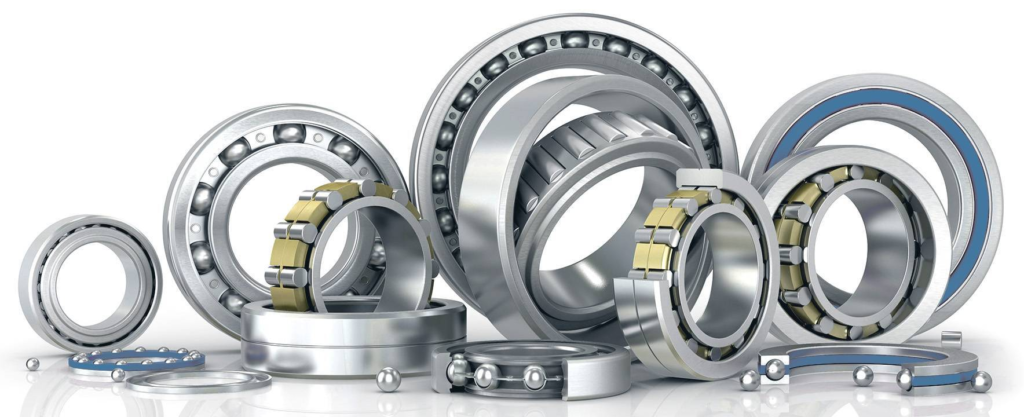
Not shaped like balls, these rollers sit at an angle where surfaces converge to a point. Built for handling push from multiple sides, they manage force from both sideways and straight-on directions. Unlike round bearings, this design allows smooth turning under complex pressure. The meeting line of cone-shaped parts makes movement possible during operation.
On the other hand, their design is very rigid. Even if the taper angle is not perfectly aligned by a fraction of a degree or the inner ring’s “large rib” surface finish is very rough, the level of friction will increase dramatically. In the B2B world, the cheapest bearing can be the most expensive purchase if you take into account the lost production time and repair expenses. To be honest, it appears that the genuine worth of a bearing is only uncovered when it is not talked about, i.e., when it is working silently and efficiently.
1. The ‘Paper Trail’: Compliance-Ensuring Certifications
India’s Bureau of Indian Standards (BIS) has evolved materially from a voluntary guideline to a compulsory norm for many industrial sectors. In particular, IS 12102:1987 outlines the specifications for single-row metric tapered roller bearings.
The first thing to do when you are reviewing a tapered roller bearing manufacturer is not to request the quote but to check the availability of a BIS license. A manufacturer with certification goes through the complicated process of factory audits where officials examine the testers and randomly choose the samples for the independent testing lab.
Moreover, some global players cannot do without the following Certificates:
- A solid framework begins here – ISO 9091:2015 sets out what’s needed for an effective quality management setup. Though quiet in tone, it shapes how organizations track consistency. Behind every process, clarity matters just as much as results do. Each rule within helps steer decisions toward reliability. Not flashy, yet built to last under pressure. What counts is not perfection but progress made visible.
- Staying ahead in car making, IATF 16949 defines the highest standard – driven by constant improvements, stopping errors early. With stricter oversight at each stage, waste drops while consistency grows among suppliers.
- Material Traceability – It is expected of a trustworthy manufacturer to provide traceability all the way from the raw material to the finished product.
2. Metallurgy: Overcoming Wear and Tear
One of the most frequently made mistakes is to think that all the “steel” is the same. Achieving the right hardness is essential for a bearing to last for thousands of hours under high load. The hardness is usually obtained through a heat treatment process that is carefully controlled and measured in the Rockwell C scale with values from 58 to 62 HRC.
The heat treatment is perhaps the most decisive factor for the quality of any bearing. In most cases, a manufacturer cannot ensure the quality of outsourced heat treatment whereas a reliable tapered roller bearing manufacturer will almost definitely have an in-house heat treatment plant. Essentially, “case hardening” involves hardening the outer layer while leaving the core material soft and ductile. In the absence of sufficient case hardness, the surface will deteriorate rapidly through a process known as “spalling.”
In fact, the oxygen content in steel is a critical figure. The fewer the number of non-metallic inclusions, the fewer the stress points at which micro cracks can originate, and thus, the steel will be more resistant to mechanical fatigue. Major Indian manufacturers such as NBC or Timken India are obsessed with the details of metallurgical characterization, and sourcing teams should be as well.
3. Engineering Depth: More Than Just Catalog Specs
Where a trading house can only offer a catalog with part numbers, a genuine manufacturer is able to provide helping technical consultation. I mean look again at the huge variety of applications; an approach that makes one product suitable for all will hardly work in the case of specialized industrial requirements.
In case the application is subject to “shock loads” like a stone crusher or a mining conveyor, a regular TRB might get damaged. A dependable supplier is the one that will recommend the following technical modifications:
- Special Coatings: The options could be Black Oxide or Manganese Phosphate treatment that would not only lower the coefficient of friction but also prevent ‘fretting’ and corrosion in wet or hostile environments.
- Improved Internal Geometry: The “crowned” roller with its slightly convex profile is mainly used to cater for minor misalignment of the shaft.
- Special Cage: In the event that the speed is very high, the pressed steel cage may be replaced by machined brass or glass-fiber reinforced polymer.
If you do not have to give the manufacturer the operating conditions, lubricants, or speeds, yet he or she can agree to all your requests in advance, then the chances are that he or she is just a supplier and not an engineering partner.
4. Understanding Indian Market Dynamics
The Indian bearing market is at present worth more than 2 billion US dollars and the growth rate is at a noteworthy 13.5% CAGR. It is an extremely vibrant sector comprising the biggest global multinationals and very strong Indian brands.
Domestic giants in the organized sector like SKF India, Schaeffler (FAG/INA), Timken, and NBC (National Engineering Industries) are the first choices of reputed sourcing brands because of their ultimate quality and consistency. But the rising new Indian manufacturers’ tier rocking their niches is to be reckoned with as well.
One of the major aspects of a trustworthy mid-sized tapered roller bearing manufacturer would be the presence of their export market. If a company is able to provide goods to Germany, Japan, or the United States, that is probably the best confirmation of their quality audits and conformity with international standards.
5. Testing and Validation: A Matter of Detecting Accuracy
Proof of quality means showing numbers. That factory must have tools ready to display – like testing devices and check systems – to back up what they claim
- A machine that checks part sizes down to tiny fractions of a millimeter. It measures each detail with extreme care, using precise touch probes. Not every tool can catch such small differences – this one does. Accuracy matters most when even a micron off changes everything.
- Surface Profilometers: These measure the “Ra” (surface roughness) value on rollers and ribs, which is critical for the formation of an effective lubricant film.
- Noise and Vibration Testing (Anderson Meters): One of the major symptoms of inner flaws in a tapered bearing is the noise. A well-manufactured bearing is thus a quiet one.
Whenever possible, it is advisable to carry out a walk-through inspection at the manufacturing site or visit virtually. The condition of the production area, its tidiness, state of the CNC grinding machines, and the degree of orderliness in the flow of work is an excellent measure of how consistent and therefore reliable the final product would be.
6. Concrete Steps: 5-Point Process for Partner Selection
This checklist can be used by procurement teams or lead engineers to filter down the pool of potential suppliers:
- QAP: Rather than a general certificate, go for a Quality Assurance Plan, which basically defines what quality standards will be used in the production of your batch.
- Confirming Lubrication Standards: Most of the time, it’s the grease that gets changed, and that’s why some low price but low-quality bearings fail even though they look fine initially. Make sure the grease used is from a reputable brand (Shell, Mobil, SKF) and that it is suitable for the operating environment.
- Ensuring ISO 355 Compliance: Using ISO 355 as a reference will guarantee dimension interchangeability for metric bearings. This is especially crucial for maintenance teams which may be faced with emergency part sourcing situations.
- Assess Technical Support: Find out if the manufacturer provides root cause analysis service for early failures. A partner not only replaces the part but is also there to solve the problem.
- Anti-Counterfeiting Policies Check: Counterfeit goods present a huge problem in the Indian market. The security features that a reliable tapered roller bearing manufacturer uses to signify their genuine product include unique QR codes stamped on the packaging for instant authentication verification.
7. Industrial Sourcing: The Cost-Value Conundrum
People are often tempted to fixate their attention on the 20% price difference that exists between a premium manufacturer and a budget alternative. However, the “list price” is just a minor fraction of the entire cost of ownership.
Suppose a premium bearing can cost ₹1,500 and can last for 24 months while a budget bearing would cost only ₹1,000 but would break down within 6 months. The latter situation would be the result of 4 hours lost production time, labor cost of replacing the bearing and if the housing or the shaft gets damaged, the repair would be even more expensive.
It could be thought that the price of a unit represents the cost of its running time; I personally believe that the main focus should be on the cost-per-hour of operation rather than the cost-per-unit. It just seems like common sense, but in the heat of a budget meeting, it’s easy to forget the long-term impact on the bottom line.
Conclusion
It all boils down to the choice of a tapered roller bearing manufacturer as this can either make or break the reliability of a whole system. Far too often, quality gets overlooked without a second thought. When teams insist on detailed metal analysis, double-check BIS approval, and weigh how deeply engineers understand materials, buying stops being just about orders. Deals turn into lasting collaborations – simply because standards rise. That shift? It starts long before the contract is signed.
A quiet workshop is what matters most – machines that run without constant fixes mean money stays where it belongs. In India’s business-to-business space, cutting corners on quality ends up costing more later. When makers keep their methods hidden, trust slips away fast.