
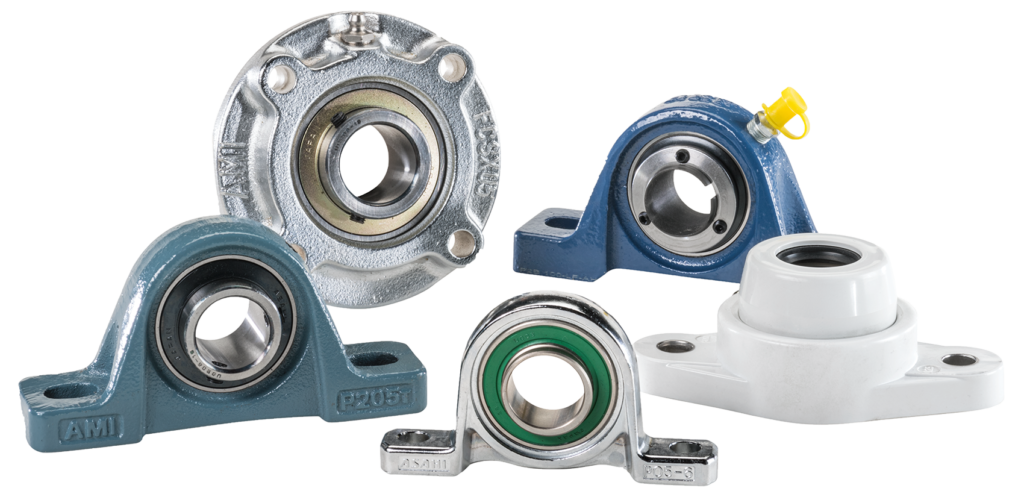
In the field of industrial mechanics, rotating equipment is the most important part of productivity. Drives, fans, conveyors, turbines, compressors, and many other systems all need smooth, consistent rotation to work. Pillow block bearings is helpful part of rotation. It may look small but help machines last by aligning parts reducing friction and that’s really important.
For design engineers maintenance techs or procurement specialists understanding pillow block bearings and benefits supports better choices to help run business and prevent equipment failures.
What is a pillow block bearing?
It is a mounted bearing often called a plummer block that helps support a rotation. It usually has:
- Made of cast iron or steel (the “pillow” section),
- An insert bearing that has a spherical outer surface and an inner ring (bore),
- Holes for mounting to a base or frame to keep it in place.
People use pillow block bearings for a broad range of tasks, from light to heavy-duty. Their modular form makes them easy to install and maintain.
The Role in Rotating Machinery
Pillow block bearings provide a number of important things for machines that turn:
- Holding up rotating shafts
Their main job is to hold up horizontal shafts, as those in conveyor systems and mechanical drives. They keep the shaft from bending and make sure it stays in line even when the load and speed change.
- Lowering Friction
The insert bearing cuts down on the friction that happens while the shaft spins and the support structure stays still. This cuts down on wear and heat accumulation, which makes machines last longer and use less energy.
- Letting the compensation for misalignment
Many pillow block bearings may self-align because their outer diameter is round. This means they can make up for tiny mistakes in mounting or shaft alignment. This helps the system run smoothly and lowers the amount of load on it.
4. Dealing with Different Loads
Depending on the kind of bearing insert (ball, roller, or plain), they can withstand both radial and axial loads. This makes them good for anything from slow-moving conveyors to fast-moving motors.
Examples of how to use it in different fields
Pillow block bearings are used in a lot of different fields:
- Manufacturing: conveyor belts, packing machinery, and tables that turn
- Agriculture: Tools like combines, threshers and grain elevators
- Automotive: Driving assembly lines and moving materials
- Construction: For crushers, screens, and transfer belts for mining
- HVAC: Shafts for fans and blowers
- Food and drink: Stainless steel pillow blocks are utilised in places where cleanliness is very important.
Important Things to Think About When Picking Pillow Block Bearings
When choosing or ordering pillow block bearings, there are a number of things that affect how well they work and how long they last:
- Speed and Load Rating
Know the speed of operation and the radial and axial loads that the bearing will have to handle. Overloading or going too fast might cause things to break too soon.
2. Shaft Size and Fit
For stability plus less vibration you can choose the right bore size also lock a bearing uses set screw eccentric adapter sleeve
3. Conditions in the environment
- If you expose bearings to moisture, dust, heat, or chemicals, you’ll need particular materials and sealing methods. For instance:
- In sandy situations, use bearings that are sealed or safe.
- In places that are eroding or necessity to be kept clean, use stainless steel or polymer ones.
4. Lubricated needs
It is important to lubricate correctly. Even though many pillow blocks arrive with oil already in them, frequent maintenance makes sure they will work for a long time. Look for ones that have grease fittings and lubrication indicators that are simple to get to.
5. Mounting Surface
Make sure that the base or surface that the bearing attaches on is level, strong, and straight. If the foundation is too soft or out of line, the bearings may wear out faster or break.
Pillow block bearings that are ready for the future
New technologies are making pillow block bearings more useful:
- Sensor-Integrated Bearings: This comprise of sensors for measuring vibration, heat, and RPM to aid with analytical maintenance.
- Coatings that resist corrosion: better materials that last longer in severe conditions.
- Modular Mounting Systems: They are designs that make it simple to put things together and schedule the shafts better, which lessens the chance of errors during installation.
As the ideas behind Industry 4.0 and smart factories grow more common, pillow block bearing technologies are changing to work with smart, linked machines.
Final words
Pillow block bearings may not get a lot of attention, yet they are quite important for rotating equipment. They help keep equipment stable, sustain it, and make it last longer in almost every industry. These simple parts may work well for years if you choose them carefully and take care of them appropriately.
Engineers and maintenance teams can keep things running well and avoid maintenance problems in the future by knowing what their job is and keeping up with new bearing technology.